

 532
532
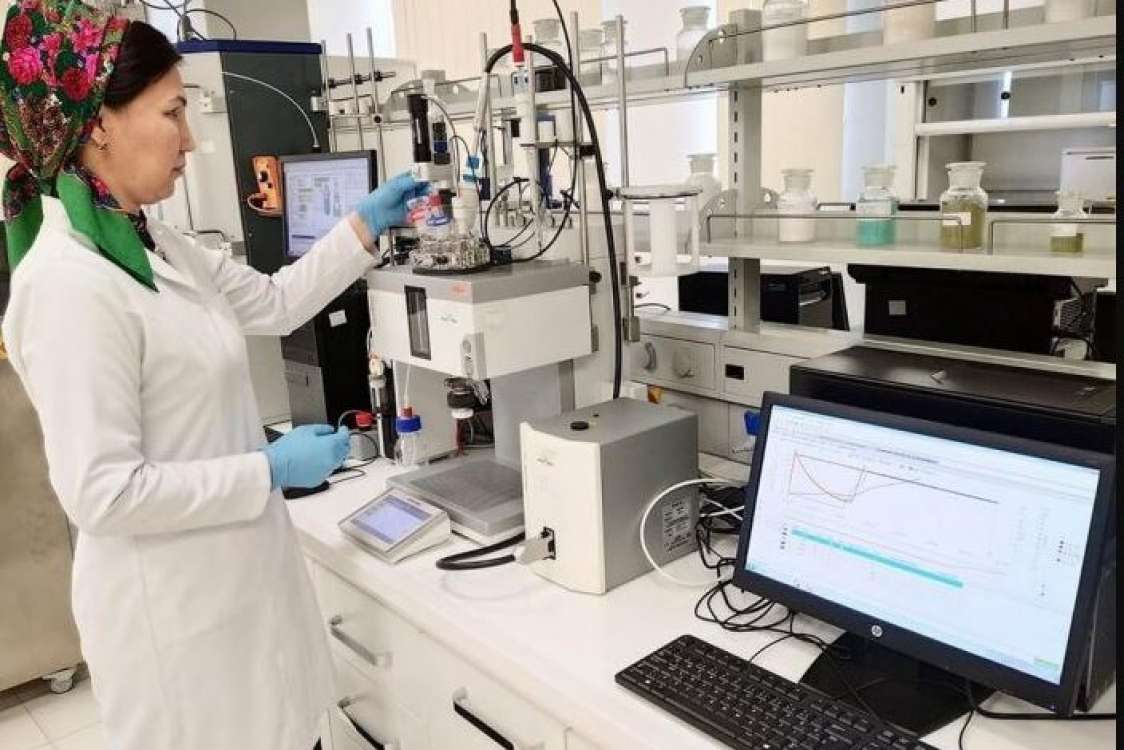
In the science lab of the Turkmenistan Academy of Sciences, researchers have created a eco-friendly material for buildings using living cyanobacteria. The news was reported in the "Neutral Turkmenistan" newspaper.
This material changes sand into a strong substance and can be used for making new roads, fixing old ones, and laying tiles on the ground. It also stops loose sand from making the roads dirty. This invention produces very little CO2, unlike cement production, which is responsible for 6% of the world's carbon dioxide emissions. Tiny organisms in the material take in greenhouse gases and make calcium carbonate with the help of natural gel. The new building material is made using high-tech methods.
This material can be used in road construction to stop sand from blowing onto the roads.Some scientists, including foreign researchers, believe that the new building material could be used widely because it has great potential. Cyanobacteria, also called blue-green algae, are a big group of bacteria that can make their own food from sunlight and produce oxygen. They are very similar to the first tiny living things on Earth, which can still be found today. Cyanobacteria are very complicated and different-looking tiny living things without a cell nucleus. They can make oxygen like big plants. Because of them, 2. 5 billion years ago, the Earth's air got filled with oxygen.
compiled by Erkin ATAMYRADOV,
student of the state energy institute of Turkmenistan.
5585
5405
5325
4726
157
245

 338
338
 245
245
 310
310
 314
314
 371
371
 318
318
 485
485
 399
399