

 1309
1309
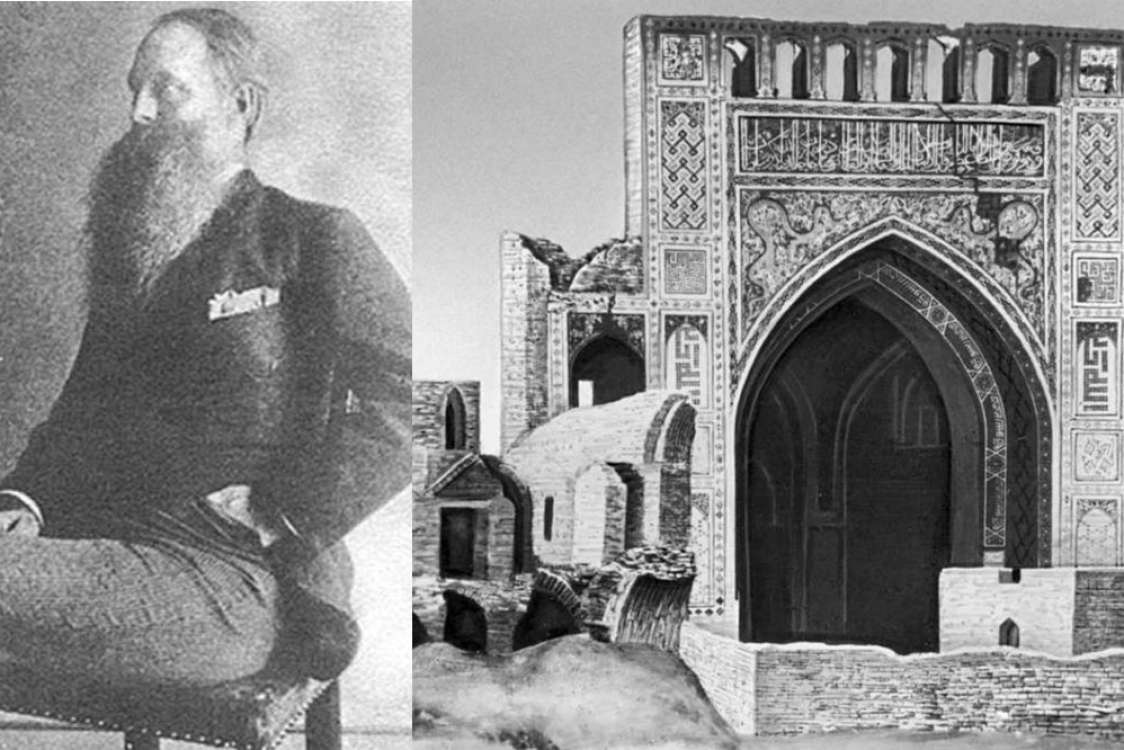
An article about the scientific expedition of American geologist Raphael Pumpelly authored by Irina Imamkuliyeva, was published on Neutral Turkmenistan.
At the beginning of the 20th century, the expedition of Raphael Pumpelly camped at the foothills of the Kopetdag Mountains, at the ruins of the settlement of Anau then little-known in the scientific world. What brought there a scientist whose service record included: Professor at Harvard University who discovered iron ore formations in Michigan, State Geologist, Director of the Missouri Geological Survey, Head of the United States Geological Survey and a member of the National Academy of Sciences.
Raphael Pumpelly was drawn to Central Asia due to his keen interest in the origin of the Aryan race. This topic has been widely debated since the mid-19th century when the first concept of the Aryan race was introduced. Some scientists believed that Northern Europe was the ancestral home of the Aryans, while others pointed to Northern Asia or Central Asia. According to Pumpelly, the evidence suggested that Central Asia could be the probable homeland of the Aryans.
Raphael Pumpelly was a famous geologist and recognized scientist who became interested in the Aryan problem. In his judgments, he relied on scholarly materials and research data from literary sources collected during his journeys through China and Mongolia. Three Chinese scientists assisted him in processing this data. One of the ancient books by Confucius contained maps that depicted the rivers of the Chinese Empire and ancient changes in the flow direction. One of the notes on a map of the Tarim Basin, supposedly lying in the north of Kashgar, read, “Here live the Usuns, people with red hair and blue eyes.” Another note reported the burial of over a hundred cities under the sand during the reign of one of the Chinese imperial dynasties at the beginning of our era.
“I had read quite a lot about the Aryan problem of that time and knew that most of the European languages were related to Sanskrit and Avestan and that their cradle rocked in or near the Pamir Mountains. Thus, the color of the Usuns’ hair and eyes seemed to indicate belonging to the Aryan people – a fact that was probably already known. But what aroused my amazement was the relatively quick burial of a large number of cities under the sand that supposedly had a significant history of existence… At the same time, I was amazed by numerous lakes and ponds that dotted the plain between the Aral Sea and Siberia,” Pumpelly wrote in his memoirs.
The scientists supposed that the vast plains of Central Asia had been covered with ice in prehistoric times, during the Ice Age. Then, after the melting of glaciers, a large, drainless inland sea was formed and created conditions conducive to the settlement on its shores and the emergence of ancient civilizations. Later, the progressive desiccation of that sea and the advance of sands turned the once fertile region into a desert. “I vaguely associated this and the buried cities with the Aryan problem,” R. Pumpelly noted. “The large inland sea, perhaps, I thought, created a favorable climate for the vast settlement.”
TIn 1903, a scientist named Raphael Pumpelly received a grant from the Carnegie Institute to search for traces of the early Aryan civilization in Central Asia. He believed that the ancestral home of the Aryans could be found in this region. To help with his search, Pumpelly, along with his son Raphael Welles Pumpelly, Professor M. Davis, and assistant E. Huntington, embarked on an expedition from Baku through the Caspian Sea.
The Governor-General of the Turkestan Territory ordered all officials to assist the travelers, and the Minister of Railways even provided them with a personal carriage. They mainly traveled by railway, but for trips that deviated from the railway route, they used horses from military posts along the way. They covered 300 kilometers to Ashgabat, moving across desert plains and along low and bare hills. As they moved eastwards, low mounds began to appear on the plain. Eventually, they visited the ruins of the Anau settlement, where they discovered two large mounds with a large number of fragments of handmade pottery. This confirmed that there were places in Central Asia that could be explored to find ancient civilizations.
In 1904, the team arranged another expedition to excavate a large mound in Anau that they had discovered on their previous trip. Pumpelly believed that this was near the location of the “wind rose” of the ancient agricultural civilization. This time, archaeologist G. Schmidt and orientalist V. Bartold joined the team, and Pumpelly's wife Elise provided invaluable assistance. His son Raphael Welles Pumpelly was also a good topographer and draughtsman who was well-versed in the astrolabe. They conducted archaeological excavations, and the information they gathered confirmed the existence of ancient civilizations in Central Asia.
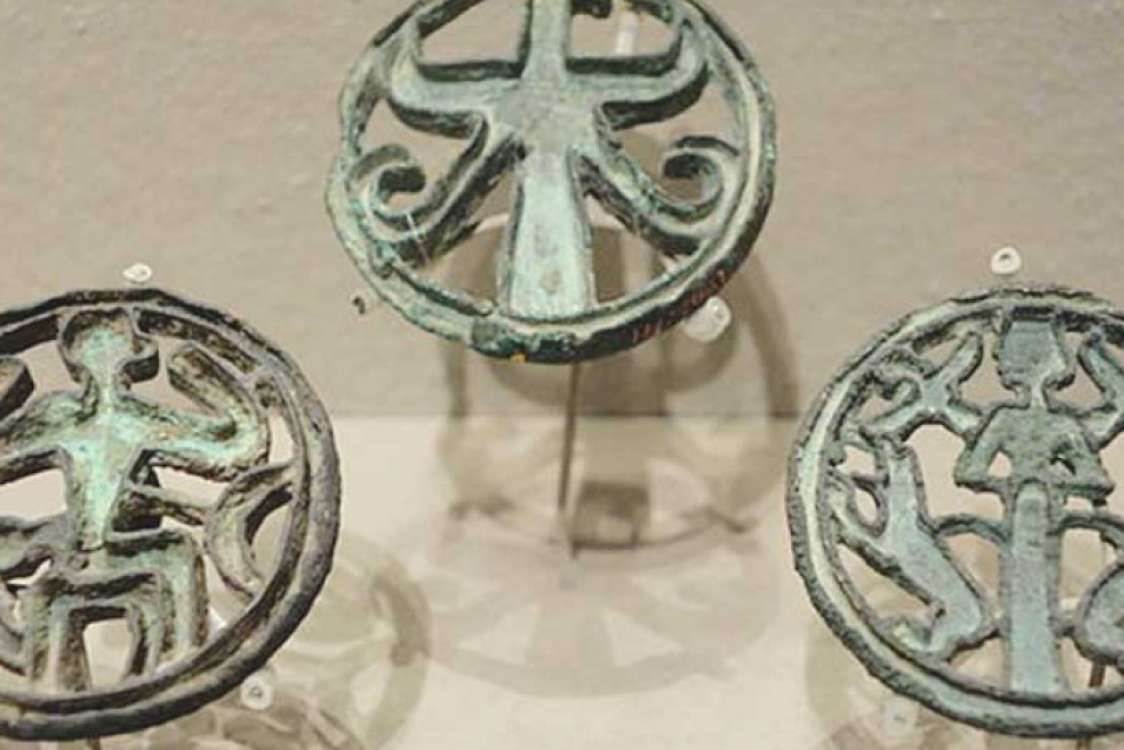
In mid-March of 1904, the travelers left their carriage on a siding within sight of the mound and camped in Turkmen yurts. The expedition members worked in Anau with unflagging interest. During their excavations, the researchers found both large items, such as hearths, vessels, and burials, and smaller ones, such as fragments of pottery and animal bones. They sifted through huge amounts of earth to not miss even the tiniest of things, such as beads, terracotta figurines, flint tools, bronze items, copper, and lapis lazuli jewelry. These were simple items, but their value lied in them representing the distant past in untouched layers, located far from the sites of classical civilization. The scientists found the remains of ancient dwellings and uncovered several burials. They discovered that the people who had lived there were fire worshippers. The excavations of the archaeological layers of the V millennium BC led to very important discoveries. The clay shards contained the remains of cereals like white wheat, ak bugday, and two-row barley. This led to the conclusion that Central Asia had been one of the earliest regions on earth where people had begun to use cultivated grain varieties. The bones of domestic animals like horses, sheep, long-horned bulls, and Bactrian camels testified to the triumph of human over nature.
R. Pumpelly wrote, “The transition of man from barbarism to civilization shows us the starting point of the domestication of animals and the beginning of man’s control of the horse, which helped him evolve the world.”
The Askhabad Newspaper wrote that “An American geologist R. Pumpelly donated a rich collection of household items and ancient tools collected on the ruins of the Anau fortress to the regional museum.”
Shortly before he died in 1923, Raphael Pumpelly wrote that the dream of 40 years of his life “ended with the publication of books about the civilizations of Anau, their impact on the environment, and connections with Asian and European sources.” The results of the work done by the American expedition were published in two volumes with numerous drawings and photographs. The two-volume book "My Memoirs" by R. Pumpelly was published in 1918.
 5585
5405
5325
4726
157
245
5585
5405
5325
4726
157
245

 338
338
 245
245
 310
310
 314
314

 371
371
 318
318
 485
485
 399
399